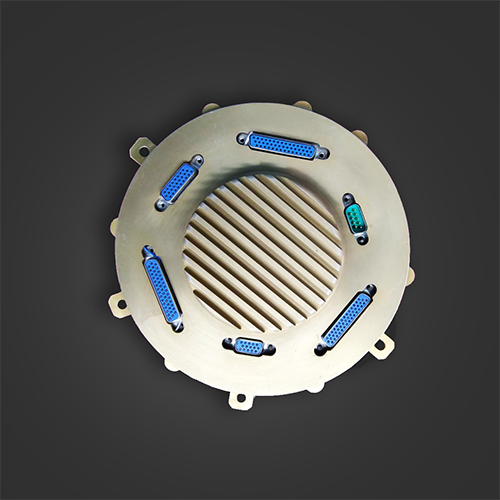
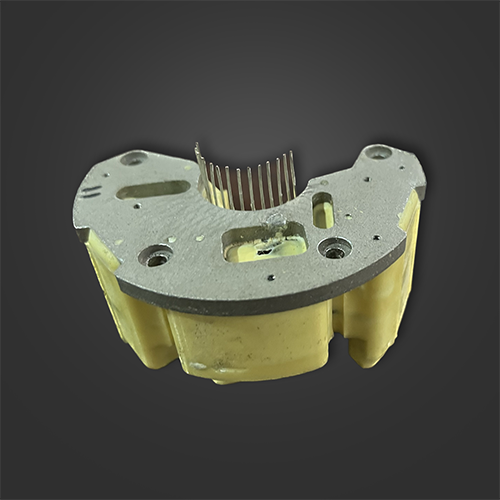
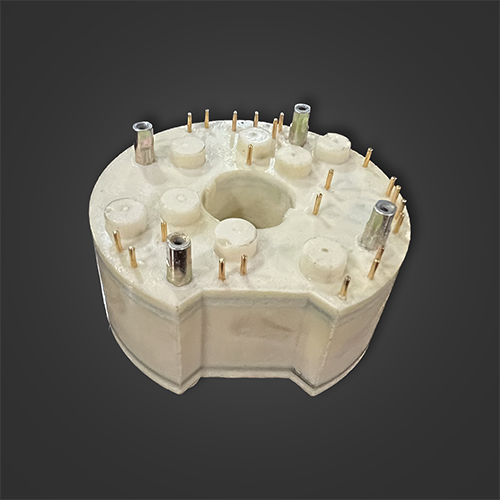
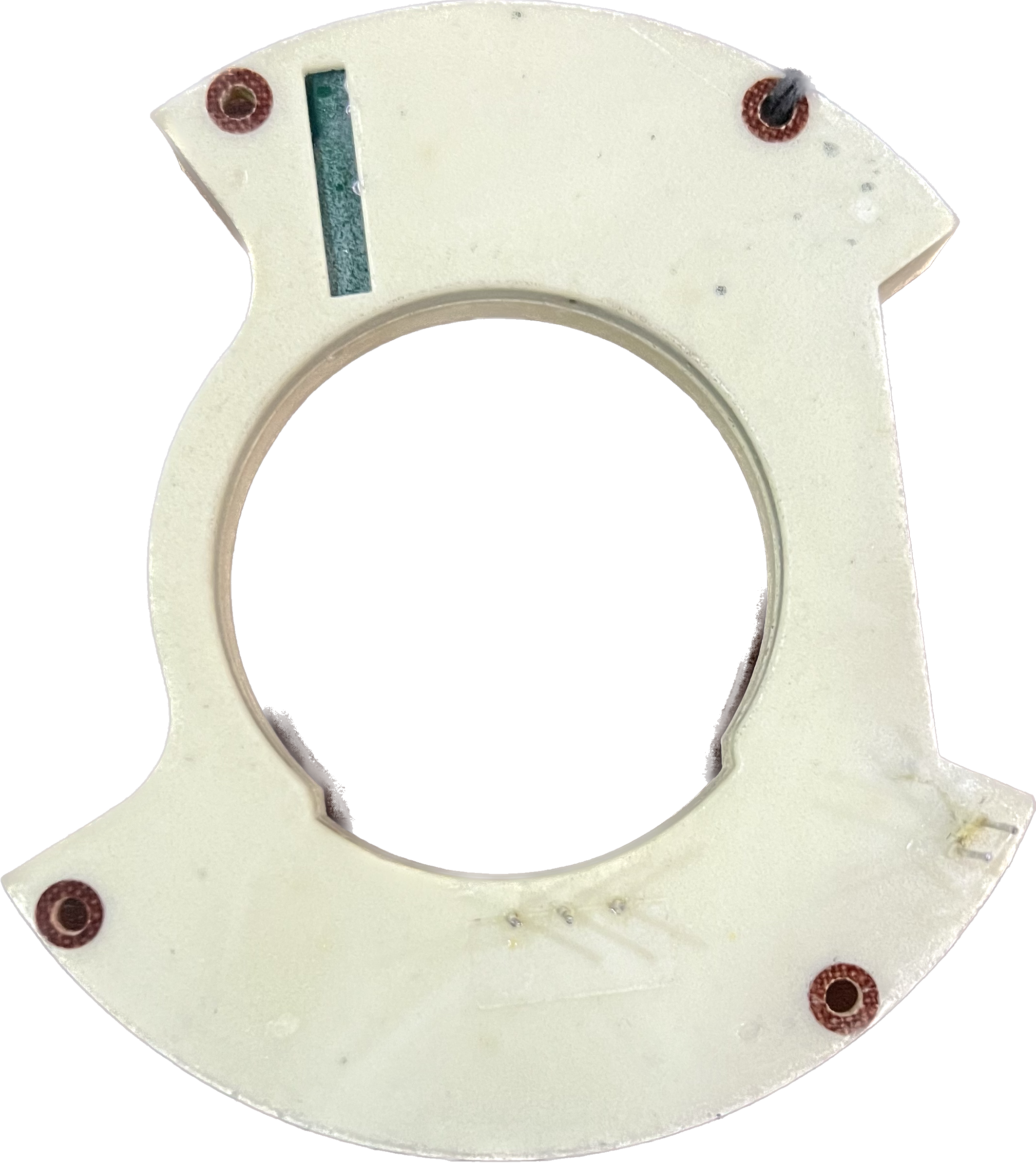
Missile systems are a cornerstone of modern defense, providing precise, long- and short-range capabilities to neutralize threats across air, land, and sea. At Sigma, we design and develop advanced missile systems that combine cutting-edge technology with unmatched reliability. Our solutions are tailored to meet the strategic needs of military forces, ensuring precision, optimal performance in the most demanding environments.
End Game Package
On-board module used in a guided missile triggers the detonation pulse based on commands from OBP and LPF
Using the predefined internal logic, initiates the detonation pulse for the time delay
Accepts commands and inputs from On Board Processor (OBP) and Laser Proximity Fuse (LPF)
Computes time delay using internal logic and algorithm to issue detonation pulse for maximum impact
Amplifier for INVAR Missile
Integral component of the INVAR Missile system, designed to engage both stationary and moving armoured targets (Tanks)
Connects the control loop with the transducer of the gyro coordinator
Carries out on-board Signal Processing
Electronic Delay Unit & Receiver Unit - Konkurs Missile
Integral component of the KONKURS-M system, designed to engage both stationary and moving armoured targets (Tanks)
Guides the direction of the missile
Communicates between the Control Drive Unit and BMP-II
Connects the control loop with the transducer of the gyro coordinator
Delays the time between pre-cursor charge warhead and main charge warhead
Delay time: 300 msec
Quad Digital Actuator Controller (QDAC):
Missile flight control system uses a cruciform fin configuration
Four (4) fins, each controlled by a linear electro-mechanical actuator
Actuator consists of a BLDC motor driving a ball screw/nut mechanism
Linear motion is converted to rotary motion using a crank arm
Position feedback is provided by a contactless potentiometer
Single enclosure houses four (4) Digital Actuator Controllers (DACs)
Each DAC controls one actuator
DAC drives the BLDC motor using PWM through a hex MOSFET bridge
QDAC communicates with the Missile Flight Control Computer (MFCC) via MIL-STD-1553 bus
The system operates on 28V DC supplied by the missile’s onboard battery
MFCC acts as the Bus Controller (BC), sending commands and receiving feedback every 10 milliseconds
Rear Servo Assy.- LRSAM/MRSAM
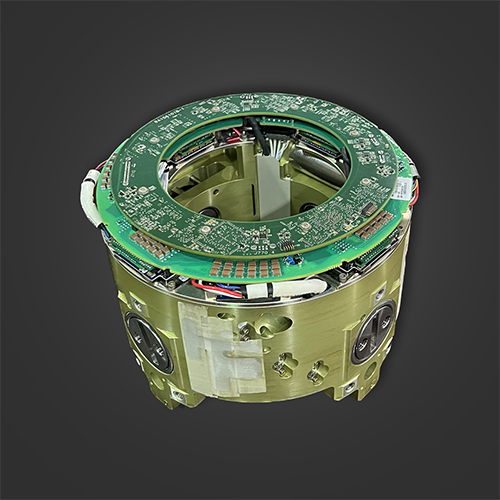
Manufacture, integration and testing of electromechanical assembly of SAM:
4-axis electromechanical system
Controls fin deflection of SAM missile
Actuation mechanism with BLDC motors
Absolute position 16-bit optical encoder
In-built electronic DSP controller
Intelligent drive electronics
28VDC operated
Compact size with in-built gear assemblies and mechanical parts
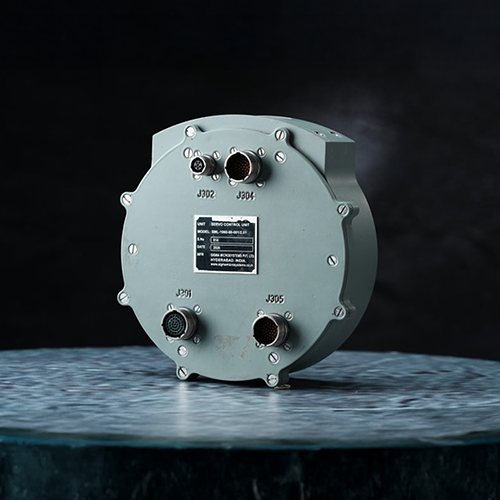
Servo Control Unit (SCU) for AKASH
On-board Servo Control for Akash Missile
Processes analog commands from On-board processor (OBP)
Drives six actuators (four for tail control, two for wing control)
Energizes the electro-pneumatic solenoid for uncaging the wings
Input Voltage: 28 ± 4V
Input Current: Max. 1 Amp at full load
Connectors: Round-shell connectors
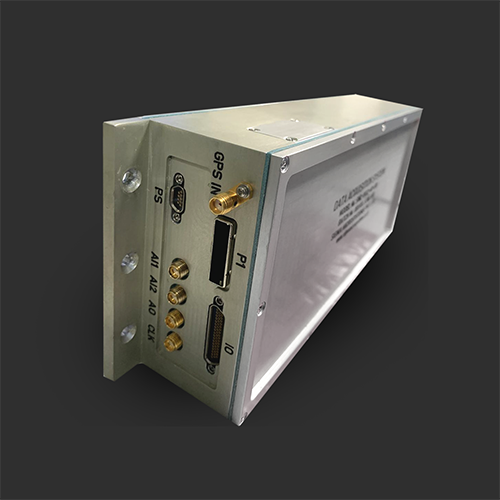
Data Acquisition Unit
On-board System for Image Processing
Zynq Ultra Scale+ MPSoC based ARM Processor SBC
16GB DDR-4 Memory
128MB configuration and boot flash memory
MIL-STD-1553B link
Ethernet interface (GbE)
Serial port interface
One PCIe 2.0 interface
Two high-speed ADC channels with 310MSPS sampling rate
Two low-speed ADC channels with 40MSPS sampling rate
Sixteen digital inputs
Sixteen digital outputs
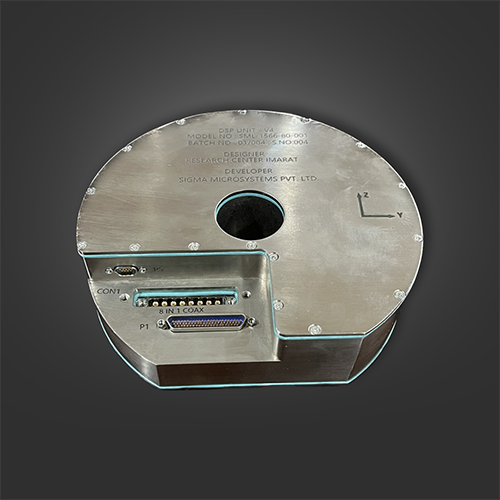
DSP Unit
Integral part of Radar Seeker for Detection and tracking of target
ARRIA–V FPGA based design, with Tiger SHARC TS-201 DSP